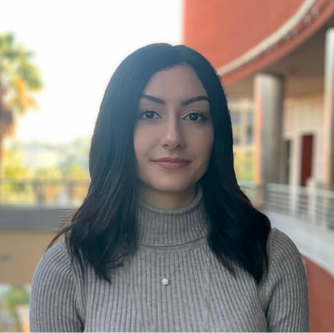
 We asked the members of the 2023-2024 Student Committee to answer some questions about themselves to help you get to know who they are and what they do.
What is your school, program, and year? I am a first year student in the M.S. in Forensic Psychology program at Cal State LA. Why psychology and the law? I am passionate about the intersection of psychology and the law because it offers a powerful avenue to drive positive societal change. This unique combination of fields can allow me to explore the depths of human behavior and cognition while also working towards shaping laws and policies that not only address legal complexities but also nurture understanding and compassion within society. What is your favorite thing about your current graduate program? The diverse backgrounds and close-knit community are my favorite aspects of my graduate program. If you were not in graduate school what would you do? If I was not in graduate school, I would probably be working full time and traveling whenever I could. What advice do you have for those applying to graduate school? To get as much guidance as possible, and from different people as well. It is essential to learn from others’ experiences; especially mentors or graduate students. Coffee or tea? Coffee. Cats or dogs? Cats. What three words would you use to describe yourself? Extroverted, ambitious, and determined. What is on the top of your bucket list? Getting my Ph.D. and becoming a professor. What is the worst song, in your opinion? Hmm.. I really could not say. What is the weirdest thing in your home? Although not a thing, my cat is definitely the weirdest creature (in the best way possible) in my home. Is cheesecake actually cheese pie? No. Explain your hot take on cheesecake. It is great
0 Comments
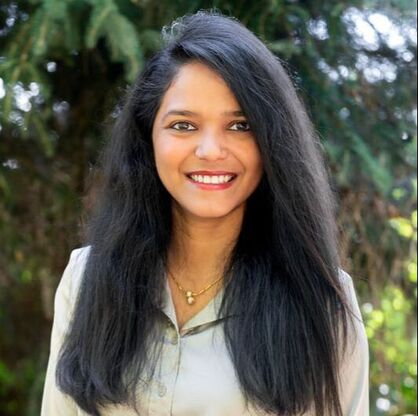 We asked the members of the 2023-2024 Student Committee to answer some questions about themselves to help you get to know who they are and what they do.
What is your school, program, and year? Suchika Siotia, Fielding Graduate university, PhD Clinical Psychology with concentration in forensic psychology, 3rd year Why psychology and the law? The intersection of psychology and the law fascinates me because it unveils the intricate dance between the human mind and the complexities of justice. Understanding how psychological principles influence legal processes, decision-making, and behavior allows for a nuanced exploration of the factors shaping our legal systems and, ultimately, society. It's a dynamic field that bridges two realms, offering insights into both the individual and societal dimensions of justice. What is your favorite thing about your current graduate program? I value the flexibility of Fielding Graduate University's APA-accredited online blended program. This format allows me to balance academic pursuits with family commitments, offering a high-quality education while accommodating diverse lifestyles. If you were not in graduate school what would you do? If I were not in graduate school, I would likely be working in the field of psychiatry, utilizing my expertise to assess and prescribe appropriate treatments for individuals dealing with mental health challenges. What advice do you have for those applying to graduate school? Embarking on the journey of applying to graduate school can be a rollercoaster of emotions, but the potential consequences are undoubtedly worth the ride. In addition to academic achievements, actively engage in extracurricular activities and network connections. These not only enhance your application but also contribute significantly to your personal and professional growth. Coffee or tea? Tea: a tranquil elixir, a sip of serenity in a cup. Cats or dogs? I love both! Cats with their graceful independence and dogs with their boundless loyalty—it's the perfect blend of feline finesse and canine camaraderie. What three words would you use to describe yourself? Compassionate, Independent, Adaptable. What is on the top of your bucket list? Embarking on an Antarctic cruise. What is the weirdest thing in your home? Well, that would be me—I bring the quirks and unpredictability. Is cheesecake actually cheese pie? No. Explain your hot take on cheesecake. Cheesecake is the rebellious cousin of the cheese family. It tried being a pie once, but the crust just couldn't contain its creamy dreams. So, it decided to break free, add some sweetness, and become the rockstar dessert we know and love. Cheesecake: the dessert rebel, blending creamy comedy with a crusty twist—because who needs to follow dessert rules anyway? We asked the members of the 2023-2024 Student Committee to answer some questions about themselves to help you get to know who they are and what they do. 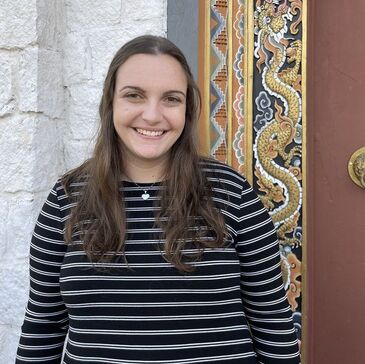 What is your school, program, and year?
University of Texas at El Paso, Legal Psych PhD program in my third year. Why psychology and the law? I got into psychology and law after being in a social psychology lab in undergrad. I wanted to apply what I had learned to how individuals with justice system experiences interact with greater society and how we can right the social injustices faced by those with justice system involvement. What is your favorite thing about your current graduate program? My favorite thing about my current graduate program is the statistical training - I feel prepared to go on the job market and do any kind of data analysis needed! If you were not in graduate school what would you do? I would have a less exciting 9-5 job, but with a hobby farm and lots of pets! What advice do you have for those applying to graduate school? As much as you want the program to accept you, you also need to accept the program. Make sure it's a good fit for you before making your decision! Coffee or tea? Coffee, but if it's past 3pm I can only handle non-caffeinated tea! Cats or dogs? CATS! I have two - Phinneas and Gouda. What three words would you use to describe yourself? Nerdy, hardworking, and adventurous. What is on the top of your bucket list? I want to visit all the National Parks in the US! What is the worst song, in your opinion? Happy birthday - nobody likes singing it or having it sung to them. What is the weirdest thing in your home? An unusually large amount of yarn. Is cheesecake actually cheese pie? Yes. Explain your hot take on cheesecake. I hate that my answer is yes, but if we're being technical, it's cheese in a pie crust. International Students and Pre-Doctoral Internship: An Interview with Maria Aparcero-Suero9/18/2023 Maria is an international student from Spain. She is a Ph.D. candidate in Clinical Psychology at Fordham University. She is currently completing her pre-doctoral internship (forensic track) at Patton State Hospital and will complete her post-doctoral fellowship there during the upcoming training year. Maria joined the Psychology-Law Research Lab at Fordham University in the fall of 2017. Prior to her doctoral studies, she earned a master’s degree in Criminal Justice & Criminology at East Tennessee State University. Her major research interests include forensic assessment, cross-cultural assessment, instrument validation, immigration psycholegal evaluations, feigning, and sexual offending. Maria is an active member of the International Association of Forensic Mental Health Services (IAFMHS) Equity, Diversity, and Inclusion Committee. She also served as the international student representative at Fordham Graduate Student Council for 4 years (2018-2022).
In this interview, Maria discussed unique challenges faced by international students in the preparation of pre-doctoral internship in clinical psychology. Rules and regulations related to international students (e.g., work permit, health insurance) were highlighted during the discussion. The timing of applying for post-doc position as well as seeking employment were also covered. Below is an outline with timestamp for your convenience: (00:20) Introduction (07:16) What did you do to be competitive before applying to a clinical psychology program in the U.S.?
by Jordan Donson (2022-2023 Secretary) In 2021, Dr. Walsh graduated with her Ph.D. in clinical psychology from the University of North Texas (UNT). Recently, she shared guidance and advice for graduate students in various stages of their programs, but most importantly, she reinforced hope for anyone who may be struggling. Throughout her internship and post-doctoral training, Dr. Walsh worked at Western State Hospital. Now, she works at the Office of Forensic Mental Health Services in Washington, and is on their inpatient unit – still stationed at Western State Hospital. Additionally, she does evaluations at Eastern State Hospital in Spokane, as well as some evaluations at the jail on the western side of the state. Essentially, Dr. Walsh is living out her dream being able to engage in “a little bit of everything.” Specifically, her position allows her to do violence risk assessment for patients found NGRI, competency evaluations, and mental state at the time of the offense evaluations throughout Washington. Through her job, she is able to do all different types of criminal forensic evaluations that would come to a state forensic evaluator, which is not something everybody gets to do. Dr. Walsh noted that, “[her job] is really rewarding, because it allows [her] to use different parts of [her] brain, it challenges [her] case conceptualization, and forces [her] to stay on top of the literature in a lot of different areas.” On top of her clinical work, Dr. Walsh is also involved in training programs – she supervises practicum students, interns, and post-doctoral students. Additionally, she teaches assessment didactic for the internship committee. Despite being so heavily involved in clinical assessments, teaching, and training – Dr. Walsh made it a point to address that she never works more than 40 hours per week.
So, for anyone who may be struggling – fear not, Dr. Walsh has been where we are, not that long ago. “In grad school, all the time people tell you about work-life balance, and it feels more like people just speaking, not actually wanting you to do that.” But now, being in the workforce, Dr. Walsh is truly able to value a work-life balance. Recently married, a new mom, she is able to go on trips, go hiking, and have hobbies again. No matter how you may be struggling through the difficulty of grad school, always remember that your education is valuable. It is our educations that will open the doors so that one day, too, we can have the same possibilities to have hobbies, and take trips.
For anyone still in need of words of wisdom, Dr. Walsh reflected that the “number one thing [she] would go back and tell [herself] at this age, is that there are times in grad school when you feel like you have to do things that maybe don’t line up with what you want to do long term. But it all matters – believe it or not. Even the things like, child autism differentials, for example, that feel like they have nothing to do with a future career in forensics, it all comes into play and deepens your understanding to make you a better psychologist.” So, keep in mind, that no matter how difficult this may be – there is a lot to be gained from not purely forensic experiences that will help to inform your future forensic practice.
Now, for everyone still stressing over making sure they do everything possible to secure a rewarding internship, fret not, for Dr. Walsh also provided sound advice. As someone who is involved in the internship process for Western State Hospital, she shared that while research is important, it is not the most important thing. She reminded us that, fundamentally, internship is a clinical experience. So, while it is important to have research, and presentations, what gets weighted more heavily is our clinical experiences. Of significant importance, is making sure that your clinical experiences align with the population you are looking at on internship. Of course, this is taking ‘population,’ in a more general sense. Ensuring you have experience with personality disorders, thought disorders, substance use treatment, or work in some forensic context. Really, internship sites are going to look to see if you know about their population and the unique challenges that come with working with those kinds of populations. While this may sound like a lot, the true expectation is just in being teachable, and having an idea of what this may look like. Which is why, having really solid clinical training experiences is, in Dr. Walsh’s opinion, the most important thing.
And lastly, for any students preparing to look at internship sites soon, Dr. Walsh, has offered her wisdom on this, too.
So, there you have it. While grad school may be overwhelming, exhausting, and sometimes brutal, remember that everything you are doing will be helpful down the line. Graduating and having a Ph.D. will generally make you a very competitive job applicant, so when you reach the light at the end of the tunnel, you will be in pretty high demand. Dr. Walsh’s last piece of advice is that a forensic post-doc will also hope to open a lot of doors, as far as career opportunities are concerned. She recommends a forensic post-doc to everyone so that they can take the time to really benefit from an extra year of training. But remember, that these years are just a small part of a much bigger future. Take time for yourself, and know there is meaning in every step of your training.
by Ashley Dhillon (2022-2023 Communications Officer)  Self-care can mean different things for everyone; however, for the purposes of this blog, we are talking about the concept of taking care of oneself to cope with the many stressors of being a student and wearing many different hats at once! The idea of self-care can be very enticing, but it can come with feelings of guilt and shame in academic and clinical contexts. Finding a work-life balance is heavily emphasized nowadays, but putting yourself and your wellbeing first can be difficult. Accepting yourself as a top priority is not always easy, but this blog is intended to help you start to think about many things you can do for yourself! When you start thinking about self-care, I would encourage everyone to think and treat themselves as they would a loved one. Give yourself the grace, kindness, and compassion that you deserve! Be mindful of how you’re feeling in the moment and give yourself time to reflect on what you need. Don’t feel guilty about taking breaks and be sure to set goals for your desired self-care time. Staying true to yourself and your values can help ground you in this chaotic world. Always remember that you are NOT alone in this journey and that you deserve to take care of yourself! Here is a list of self-care activities you might find helpful:
These are just some of the many ways we can all practice self-care! Don’t forget that you’ve worked hard to get to whatever place you are currently in and deserve some kindness. Please take care of yourself and spread some self-love 😊Happy self-caring forever! by Laura Stevens (2022-2023 Experimental Liaison)
COVID-19 was a terrible and turbulent time for everyone and was an especially difficult time to be studying as the world turned to online teaching mediums. However, one positive to the shift online is that it is easier now than ever to be a member of your international community. This resource will cover the benefits of getting involved in your international community and easy ways to immerse yourself. Being a Member of International Networks As one of the first UK-based students to be a part of the APLS student committee, I am really excited to be part of an international community of researchers and practitioners working in Psychology and Law. In addition to my role within the student committee, I am also a research assistant within the Rights for Time Network – an international organisation that brings together academics and practitioners to explore how time affects war, displacement, and violence in order to progress conversations about humanitarian protection. I am also a member of the UK-South Korea Eyewitness network that fosters collaborations to improve the documentation of eyewitness memory evidence globally. All the aforementioned networks are either free to join or for an extremely subsidised fee as a student, so there is no better time to immerse yourself in international research. Benefits of International Networking
Ways that you can get Involved!
Being a member of your international community does not need to be as difficult or as expensive as you think. Happy Networking! by Cassidy White (2022-2023 Campus Representative Coordinator)
As the cycle of graduate school applications are now submitted, it’s time for the best part – interviews! In this post you will find some tips and resources for a successful graduate school interview. Do your research
Don’t forget that you worked hard and were chosen to interview at this school. You got this! Always follow up with a thank you note/email Resources: Dr. Mitch Prinstein has an EXCELLENT handbook with all things related to clinical psychology. Section three: I just got an interview for a clinical psychology doctoral program – What do I do?! chrome-extension://efaidnbmnnnibpcajpcglclefindmkaj/https://mitch.web.unc.edu/wp-content/uploads/sites/4922/2017/02/MitchGradSchoolAdvice.pdf Practice mindfulness during breaks: https://www.youtube.com/watch?v=O-6f5wQXSu8 by Jordan Donson (2022-2023 Secretary)
If you ever find yourself looking for a new podcast that is not only entertaining but also educational, then you have come to the right place! Listed below are the top 12 podcasts to fit all your psychology, law, and grad school needs.
We asked the members of the 2022-2023 Student Committee to answer some questions about themselves to help you get to know who they are and what they do. 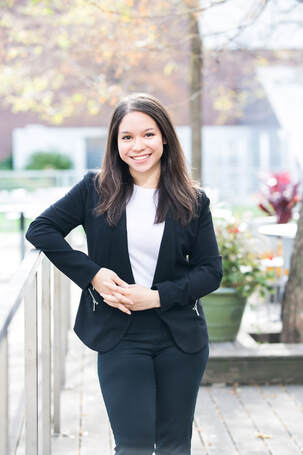 What is your school, program, and year?
UNT Clinical Psychology PhD, forensic track, 3rd year Why psychology and the law? Psycholegal scholars have such a powerful opportunity to engage in justice-minded work—this is exactly what I strive for! What is your favorite thing about your current graduate program? Our clinical training is wonderful, my lab members are such inspirational researchers, and I have absolutely made lifelong best friends in this program. If you were not in graduate school what would you do? I would probably be in law school or maybe a chef. What advice do you have for those applying to graduate school? You can make the best of any program if the environment is right. Pick a program that you feel believes in you, uplifts you, and shows up for you. If you could only watch 3 movies or tv shows over and over for the rest of your life, what would they be and why? Grey’s Anatomy, Criminal Minds, and probably Love Island. Is cereal soup? No. Explain your hot take about cereal. Soup is a dish that includes multiple components. Cereal is referred to as cereal regardless of whether it has milk in it or not. Is water wet? Yes. Explain your hot take about water. It has to be wet in order to make other things wet. Something dry cannot make another thing wet. What is a quote you like and who said it? “We shouldn’t teach great books; we should teach a love of reading. Knowing the contents of a few works of literature is a trivial achievement. Being inclined to go on reading is a great achievement.” -Skinner If you could invite five people (dead or alive) to a dinner party, who would it be any why? I would gather 5 people from across my family’s lineage going many centuries back to really know where we came from. What’s the best Wi-Fi name you’ve seen? We’ve Been Trying To Reach You About Your Car’s Extended Warranty What is your favorite city and why? Akureyri, Iceland is beautiful, and the coffee is so good! |
About the Editor:
The American Psychology-Law Society (Division 41 of the American Psychology Association) Student Committee is composed of elected student leaders representing the interests of our student members. Categories
All
Archives
March 2024
|

 RSS Feed

|
Except where otherwise noted, content on this site is licensed under a Creative Commons Attribution 4.0 International license. Icons by Icons8
|
|