|
by Jordan Donson (2023-2024 Chair-Elect)
For many people, the GRE is the most daunting part of applying to graduate programs. Listed below are tips and tricks to remember that are designed to make tackling the GRE, and beginning the application process, a little less stressful!
Remember the resources available to you – ETS provides numerous free online practice tests as well as practice prompts for the writing section. The Princeton Review offers various GRE practice tests and strategy sessions (free of charge) as well as different instruction courses for the exam. Don’t forget you can also always study on-the-go! Magoosh offers a free app with flashcards and practice questions.
0 Comments
by Cassidy White (2023-2024 Secretary) Dr. Meaux received her Ph.D. from The University of Alabama in Tuscaloosa and is now an assistant professor at The University of Alabama in Huntsville. She completed her clinical internship at Tulane University School of Medicine with an emphasis in Forensic Psychiatry. She is a clinical forensic psychologist who conducts research pertaining to the intersection of psychology and law. Her expertise include biases in the criminal system, forensic mental health evaluations, legal decision-making, and violence risk. She is thrilled to share more information about the program and invite prospective students to apply! What? The Applied Experimental Psychology Ph.D. with concentrations in Psychology & Law or Human Factors. Where? The University of Alabama in Huntsville
When? The program can be completed full-time or part-time which offers individuals the flexibility to work while completing the program. And you didn’t miss the deadline! Applications are reviewed year round and start dates are not just in the Fall but also the Spring. Psychology & Law Concentration: The PhD in Applied Experimental Psychology with a concentration in Psychology and Law focuses on Psychology as it applies to the legal system. In this concentration, students learn and develop prolific lines of research in human cognition, learning, memory, forensic psychology, and decision making, with foci on issues like eyewitness memory, forensic assessment, violence risk, investigative interviews, and even child witnesses. Students in the PhD program develop exceptional research, analytical, and communication skills that, when paired with this concentration, situates them well for consultation and research careers in law enforcement at both the local and federal level (e.g. Police, DHS, ATF, FBI), academia, and various other government/industry positions. The Ph.D. in Applied Experimental Psychology is designed to prepare students to solve complex real-world problems by utilizing knowledge of scientific theory and the skills involved in conducting high-quality research. The program will develop professionals who can tackle important issues facing the Huntsville business and government community, the state of Alabama, and the nation. Students can take advantage of the unique hybrid and online curriculum to meet their degree goals while taking classes! Graduates from this program will have employment opportunities in both academic and industry settings! Huntsville in particular has a plethora of opportunities from Federal Public Defender’s Office, Limestone Correctional Facility, and the FBI’s second headquarters. Additionally, there are many jobs that are anticipated to emerge in the future due to the everchanging human social, emotional, economic, political, and environmental needs. This is the program’s first year and currently they have a few professors looking to take on new students. Click the link to explore even more faculty/staff: Faculty/Staff
Visit the link below for more information or to apply: https://www.uah.edu/ahs/departments/psychology/programs/graduate/doctoral Interested in a master’s program? UAH also has a Master of Arts in Psychology – there are even opportunities for scholarship/funding at their master’s level! M.A. Program   We asked the members of the 2023-2024 Student Committee to answer some questions about themselves to help you get to know who they are and what they do.
What is your school, program, and year? The University of Alabama, Clinical Psychology & Law, 3rd year What is your favorite thing about your current graduate program? My advisors! If you were not in graduate school what would you do? Cliché, but I would probably go to law school! What advice do you have for those applying to graduate school? Take your time in finding what you truly love and take time off if you need to - you got it! Coffee or tea? Coffee. Give me all the caffeine! Cats or dogs? Dogs!! What three words would you use to describe yourself? Curious, driven, and tired. What is on the top of your bucket list? Travel more! What is the worst song, in your opinion? Friday by Rebecca Black. What is the weirdest thing in your home? My dog! Is cheesecake actually cheese pie? Yes. Explain your hot take on cheesecake. There is a crust... 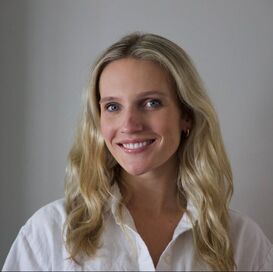 We asked the members of the 2023-2024 Student Committee to answer some questions about themselves to help you get to know who they are and what they do.
What is your school, program, and year? The Chicago School, PsyD in Clinical Psychology, currently in my third year. Why psychology and the law? I actually have a parent who works in the area of forensic psychology, so I have been exposed to the field since a young age. I initially thought I wanted to be an attorney, however, as I learned more about psychology in undergrad I realized my interests really lied at the intersection of the law and psych. What is your favorite thing about your current graduate program? Our program has students complete year long practicums in their second, third, and fourth year. So far, I have loved the diversity of clinical experience this has given me. Additionally, this has provided me with the opportunity to work with a broad range of populations while simultaneously engaging with my community in Chicago. If you were not in graduate school what would you do? Law school...or work in the fitness industry. What advice do you have for those applying to graduate school? Try and find a specific niche or area of interest early on, and look for schools with faculty that also specialize in that area. This can obviously change as you move through grad school, but it helps you connect with others who have similar interests and can help you stand out! Coffee or tea? Coffee. Cats or dogs? Dogs. What three words would you use to describe yourself? Open-minded, humorous (I like to think), and driven. What is on the top of your bucket list? Go to Italy! What is the worst song, in your opinion? Most things country (no offense to anyone who enjoys country). What is the weirdest thing in your home? My partner's gecko, Kevin. Is cheesecake actually cheese pie? No. Explain your hot take on cheesecake. Does anyone ~really~ consider the cheeses that make up cheesecake (cottage, cream cheese, ricotta) true cheese? |
About the Editor:
The American Psychology-Law Society (Division 41 of the American Psychology Association) Student Committee is composed of elected student leaders representing the interests of our student members. Categories
All
Archives
June 2024
|

 RSS Feed

|
Except where otherwise noted, content on this site is licensed under a Creative Commons Attribution 4.0 International license. Icons by Icons8
|
|