
• About
    • Get Involved >
      • Elections
    • FAQs
    • Membership
  • Student Committee
  • Conferences
    • AP-LS 2026 >
      • Conference Information
      • Proposal Types & Submission Requirements
    • AP-LS 2025
    • APA 2025
  • Resources
    • Graduate Programs
    • Webinars & Videos
    • Funding & Awards >
      • Funding Resources
      • Conference Presentation Awards
      • Grants Database
    • Education & Training >
      • General Resources
      • Training Survey
      • Clinical Internship Database
      • Legal Resources
    • Postdoctoral positions >
      • Research
      • Clinical
  • The Intersection: A Blog
  • Career Corner
AP-LS Student Committee
  • About
    • Get Involved >
      • Elections
    • FAQs
    • Membership
  • Student Committee
  • Conferences
    • AP-LS 2026 >
      • Conference Information
      • Proposal Types & Submission Requirements
    • AP-LS 2025
    • APA 2025
  • Resources
    • Graduate Programs
    • Webinars & Videos
    • Funding & Awards >
      • Funding Resources
      • Conference Presentation Awards
      • Grants Database
    • Education & Training >
      • General Resources
      • Training Survey
      • Clinical Internship Database
      • Legal Resources
    • Postdoctoral positions >
      • Research
      • Clinical
  • The Intersection: A Blog
  • Career Corner

The Intersection: A Blog

Get to Know Your Student Committee: Campus Rep. Coordinator, Haylie Stewart

11/13/2024

0 Comments

 
​We asked the members of the 2024-2025 Student Committee to answer some questions about themselves to help you get to know who they are and what they do. 
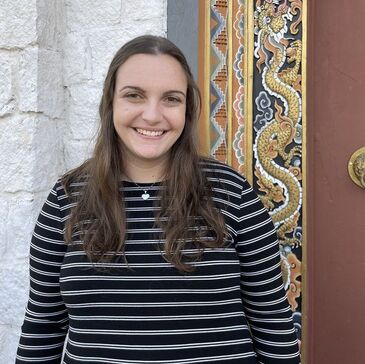
Picture
What is your school, program, and year?
University of Alabama, Clinical Psychology, 4th year

Why psychology and the law?
I've always been interested in serious mental illness and the inequalities faced by those in the legal system. Individuals with SMI, as well as individuals with criminal-legal histories, are often the least prioritized in research, treatment, and policy, which not only impacts their lives, but society at large. Psychology and law combines my interests of working with vulnerable populations and (hopefully) improving the criminal legal system.

What is your favorite thing about your current graduate program?
I LOVE my advisor. Dr. Jenni Cox is an amazing mentor and I feel so lucky that I get to work with and learn from her. She is truly the best part about the University of Alabama. 

If you were not in graduate school, what would you do?
I would probably still be managing research projects for the VA, but I would hope I was either working in performance arts or event planning. 

What advice do you have for those applying to graduate school?
For me, applying systematically helped with feeling overwhelmed by all there is to do. I gave myself deadlines for each item (including figuring out which schools to apply to) and used spreadsheets to track requirements and deadlines. Reach out to academic advisors/professionals/grad students you know in psychology to help with application materials. Tons of people in psychology helped with my statement of purpose (the hardest part) and preparing for interviews, and it made a huge difference. 

If you had one year to train, what Olympic sport do you think you could qualify and medal in?
Probably weight-lifting, though I'd prefer ice skating lol

Books or movies?
Books

If you could only watch 3 movies for the rest of your life, what would they be?
The Greatest Showman, Hamilton, Tangled

What is your go-to road trip snack?
Cheez-its

Does pineapple belong on pizza?
It's fine, I guess

Explain your hot take about pineapple on pizza. 
I don't hate it, but I won't actively choose to have it on pizza. I'm indifferent. 

What is your favorite place you have ever traveled?
Paris, France

Would you only eat hot food or cold food for the rest of your life? Why?
Probably cold foods because I love salad, potentially more than any other food (I know, weird)

What is your favorite weird fact?
Zac Efron made a tinder account, but no one matched with him because they thought it was fake

0 Comments

Tips to Overcome Imposter Syndrome in Academia

6/26/2024

0 Comments

 
by Kimia Lavasani (2023-2024 Experimental Liaison)

Doctoral programs are highly demanding and are becoming more and more competitive every year. With the growth of psychology as a field, it can be challenging to feel unique and appreciate one’s efforts as much as one should. For some, this issue can present itself in the form of Imposter Syndrome.

Here are a few tips that may help in overcoming Imposter Syndrome:
​
1. Understand it: First and foremost, it is absolutely essential to understand what Imposter Syndrome is. The easy definition marks this syndrome as one where the individual does not see their full potential as others see it. They may feel like they are a “fraud” who is pretending to know what they are doing, and who may be eventually “discovered” as someone who is not as competent as others think they are. Notably, this can be extremely common among high-achieving individuals; especially if they are first-generation college students. Acknowledging and accepting that this may be what you are going through is the first step in the right direction!

2. Manage it: There are many ways you can make such feelings more manageable. One of the most important and widely used techniques involves boosting your self-esteem. One major component of Imposter Syndrome is the fact that the individual does not accept their potential and competence in a realistic manner. To overcome this, you can keep an accomplishments notebook. You can add pictures or write a motivating sentence or two for your future self as well. This way, when you begin to notice your self-doubt coming back, you can review your notebook to remind yourself of the person you truly are. You can also leave sticky notes on your mirrors or a quick note on your phone, summarizing yourself in a way that you are proud of and motivates you. It is important to note that these are not the only ways to remind yourself of your potential, there are many creative ways you can do this. No matter what method you choose, it is essential to have reminders to look back during challenging times. Self-affirmations in any form have been shown to be effective in reducing some of the symptoms of Imposter Syndrome.

3. Ask for Help: Lastly, it is important to realize that Imposter Syndrome can be extremely debilitating if left untreated. You may be thinking that it is not a serious enough condition or that it is normal to be so full of doubt in graduate school. But the truth is that if you are consistently putting yourself down and undermining your competence, then your quality of life can be significantly impacted. There are many professional development opportunities (e.g., workshops, conferences) that can offer more detailed coping strategies. Also, it never hurts to discuss any concerns with a mentor or licensed clinician in a safe space.

Best of luck!
0 Comments

Preparing for the EPPP: Essential Tips and Tricks

6/25/2024

0 Comments

 
by Suchika Siotia (2023-2024 Diversity Liaison)

Preparing for the Examination for Professional Practice in Psychology (EPPP) can be a daunting task for aspiring psychologists. This comprehensive exam assesses a wide range of knowledge and skills essential for the practice of psychology. To help you navigate this challenging journey, we've compiled a list of tips and tricks to optimize your preparation and increase your chances of success. By following these strategies, you can approach the EPPP with confidence and achieve your goal of becoming a licensed psychologist.

1. Understand the Exam Structure
The EPPP consists of 225 multiple-choice questions, covering eight content areas:
  • Biological Bases of Behavior: Focus on neuroanatomy, neurophysiology, psychopharmacology, and biological processes influencing behavior.
  • Cognitive-Affective Bases of Behavior: Study memory, learning, perception, and emotions.
  • Social and Cultural Bases of Behavior: Cover social psychology theories, group dynamics, cultural diversity, and human behavior in social contexts.
  • Growth and Lifespan Development: Understand developmental psychology across different life stages.
  • Assessment and Diagnosis: Know psychological testing, assessment techniques, and diagnostic criteria (DSM-5).
  • Treatment, Intervention, and Prevention: Study therapeutic approaches, intervention strategies, and prevention programs.
  • Research Methods and Statistics: Focus on research design, statistical analysis, and interpretation of data.
  • Ethical, Legal, and Professional Issues: Review ethical guidelines, legal standards, and professional conduct.

2. Create a Study Plan
Set a Timeline
Establish a realistic timeline for your study period. Most candidates prepare for 3-6 months. Break down your study schedule into weekly goals, ensuring you cover all content areas.

Daily Study Routine
Dedicate specific hours each day to study. Consistency is key, so try to study at the same time each day to build a routine.

Detailed Scheduling
  • Weekly Goals: Define specific topics or chapters to cover each week. Use a planner or digital calendar to keep track.
  • Daily Sessions: Break study sessions into chunks (e.g., 2-3 hours with breaks) to avoid burnout.
  • Review Time: Allocate time for regular review sessions to reinforce memory and understanding.

Adaptive Planning
  • Flexibility: Be prepared to adjust your plan if certain areas require more attention.
  • Feedback Loop: Regularly assess your progress and make necessary changes to your study strategy.

3. Use Quality Study Materials
Books and Guides
  • Comprehensive Texts: Choose detailed study guides like those from ASPPB, which are specifically designed for the EPPP.
  • Specialized Books: Use additional resources focused on particular content areas where you need more depth.

Online Resources
  • Prep Courses: Online courses from providers like AATBS, PsychPrep, or Academic Review offer structured learning and practice.
  • Webinars and Workshops: Attend webinars and workshops that provide tips and interactive learning opportunities.

Digital Tools
  • Flashcard Apps: Apps like Anki or Quizlet can be very helpful for memorizing key concepts and terms.
  • Practice Apps: Look for apps that offer daily practice questions and simulate the test environment.

4. Practicing Effectively
Full-Length Practice Tests
  • Simulated Conditions: Take practice tests in one sitting, under timed conditions to build endurance.
  • Post-Test Analysis: Review your answers thoroughly to identify patterns in mistakes and areas needing improvement.

Question Banks
  • Diverse Questions: Use question banks with a wide range of questions to cover all content areas.
  • Explanation Review: Focus on the explanations for both correct and incorrect answers to deepen your understanding.

5. Targeting Weak Areas
Focused Study
  • Topic-Specific Resources: Use specialized books, articles, or videos to deepen your knowledge in weaker areas.
  • Additional Practice: Concentrate additional practice questions and exercises on these topics.

Group Study
  • Study Groups: Join or form study groups where you can discuss challenging topics and share insights.
  • Peer Feedback: Use study groups to test each other and provide feedback on answers and reasoning.

Seek Help When Needed
If you’re struggling with specific topics, consider joining a study group or seeking help from a tutor or mentor.

6. Develop Test-Taking Strategies
Time Management
  • Timed Practice: Regularly practice with a timer to ensure you can pace yourself during the actual exam.
  • Checkpoint Timing: Plan to check your progress at regular intervals (e.g., after every 50 questions) to stay on track.

Answering Techniques
  • Elimination Method: Use the process of elimination to narrow down answer choices.
  • Flagging System: Mark questions you’re unsure of and revisit them after you’ve completed the rest of the exam.

Staying Focused
  • Mental Breaks: Practice taking brief mental breaks to reset your focus without losing too much time.
  • Stress Management: Use stress management techniques like deep breathing or positive visualization during practice and the actual exam.

Answer Every Question
There’s no penalty for guessing, so make sure to answer every question. If unsure, eliminate obviously incorrect options and make an educated guess.

7. Take Care of Yourself
Balanced Routine
  • Exercise: Incorporate regular physical activity into your routine to boost energy and reduce stress.
  • Nutrition: Eat balanced meals and stay hydrated to maintain optimal brain function.
Relaxation Techniques
  • Mindfulness: Practice mindfulness or meditation to help manage anxiety and improve concentration.
  • Hobbies: Spend time on hobbies and activities you enjoy to balance the stress of studying.

8. Exam Day Preparation
Final Preparation
  • Review Notes: Skim through your notes and flashcards the day before the exam for a final refresher.
  • Rest Well: Ensure you get a good night’s sleep before the exam day.

Logistics
  • Test Center Familiarity: Visit the test center in advance if possible, or research its location and parking options.
  • Essential Items: Prepare all necessary items (e.g., ID, admission ticket, snacks) the night before.
​
Success in the EPPP requires a blend of strategic preparation, effective study habits, and personal well-being. By understanding the exam structure, creating a detailed and flexible study plan, utilizing diverse study materials, and maintaining a balanced lifestyle, you can approach the exam with confidence. Remember, consistent effort and a positive mindset are essential components of your preparation journey. Good luck!
0 Comments

AP-LS 2024: Bridging the Gap Between Virtual Assessment Development and Implementation

5/1/2024

0 Comments

 
by Aysha Nesbitt (2023-2024 Clinical Liaison)

This conversation took place during the annual conference of the American Psychology and Law Society held in Los Angeles, CA in March 2024. The session, titled "Bridging the Gap Between Virtual Assessment Development and Implementation," engaged a panel of clinicians and researchers in a robust discussion about the ethical and practical considerations inherent in integrating virtual assessment tools within legal and psychological contexts. Below is a file which contains a recording of the panel, as well  an outline of the conversation with key takeaways for your convenience.
Bridging the Gap 2024 Panel
File Size: 62744 kb
File Type: m4a
Download File

Introductions & experience integrating virtual care and assessment services in clinical or research settings:

Ashley B. Batastini, Ph.D., Centre for Forensic Behavioural Science, Swinburne University of Technology.
Dr. Ashley Batastini is an Associate Professor in the Centre for Forensic Behavioural Science at Swinburne University of Technology. Her work broadly focuses on novel intervention strategies for higher-risk populations and ways to improve access to appropriate services at various stages of criminal legal involvement. She has conducted work related to technological applications in psychology-law contexts for more than 10 years, which has accumulated in numerous first- and co-authored book chapters, refereed articles, conference presentations, invited talks, and both internal and external funding (e.g., U.S. Health Resources and Services Administration, the American Psychological Foundation). Dr. Batastini is currently a member of APA’s Office of Health Care Innovation Advisory Committee for Mental Health Technology and recently co-chaired the AP-LS Telepsychology Taskforce.

Dr. Glenn Scott Lipson, PhD, ABPP, Professor at Alliant International University/California School of Forensic Studies. Owner and CEO of Making Right Choices Squared.
Dr. Glenn Lipson, PhD, ABPP, is a recognized expert in Forensic Psychology. He has spent three decades tackling violence from all fronts in preventing, intervening, and providing opinions in cases involving violent crimes. As an expert witness, speaker, and advisor, he has testified in court-martials and regulatory hearings and submitted briefs through counsel to the United States Supreme Court. He has actively contributed to the San Diego District Attorney’s School Threat Assessment Team (STAT) to prevent school violence. Dr. Lipson is also the founder of MRC (Making Right Choices) that offers training on ethical and boundary violations which lead to misconduct, and of the NASDTEC (National Association of State Directors of Teacher Education and Certification), an academy for preventing and correcting misconduct.

Dr. Ana Belmonte, PhD, Chair of the Division of Forensic Psychology at The Chicago School. 
Dr. Ana Belmonte is the Chair of the Division of Forensic Psychology at The Chicago School. She is a licensed clinical psychologist in Illinois and Wisconsin. Dr. Belmonte's clinical and research interests include evaluation and assessment with forensic populations, competency/fitness to stand trial restoration, issues related to family law and families in conflict, such as divorce, parenting capacity, and child custody, and policy and legal advocacy. Prior to her current role, Dr. Belmonte served as the Director of Assessment and Research at The Chicago School Forensic Center where she launched the Center’s telehealth assessment program in the early days of the COVID pandemic. Dr. Belmonte continues to conduct evaluations through The Forensic Center’s outpatient competency restoration program. In addition to her academic and clinical work, Dr. Belmonte currently serves as the Chair of the Social Media Committee for AP-LS.

Dr. Alexandra Lugo, PhD, California Department of State Hospitals- Metropolitan.
Dr. Alexandra Lugo is an early career psychologist, recently graduating from Palo Alto University with her Ph.D. in Clinical Psychology and an emphasis in Forensic Psychology. She completed her predoctoral internship with the California Department of State Hospitals-Metropolitan in Los Angeles, California, where she is now a staff psychologist. Dr. Lugo co-developed a suicide risk assessment smartphone application for use by police officers in guiding their risk determinations and decision-making. She also works as a consultant on issues related to suicide risk assessment and leveraging technology for uses in the criminal justice system. Dr. Lugo recently served as a member on the AP-LS Telepsychology Taskforce. She has published articles and given prior conference presentations, invited talks, and guest lectures on issues related to cultural and ethical issues in the criminal justice system as well as on the application of technology to improve existing psychology-law practices.

Laura Stevens, M.A., M.S.C., University of Birmingham. 
Laura Stevens is a Ph.D. student completing her doctorate at the University of Birmingham UK. During her Ph.D., Laura has validated a mobile phone application that gathers memory evidence from survivors of sexual and gender-based violence on the ground in Kenya. This research is in collaboration with the Wangu Kanja Foundation in Kenya who co-design all aspects of the research and implements it in practice on the ground. Alongside technological advancements, we also consider the sustainability of practice in low-resource environments. She has published articles on this topic and given conference presentations and invited talks globally to discuss the use of technological advancements in low and middle-income countries. 

What ethical considerations need to be made in this work and/or what steps need to be taken to mitigate these ethical concerns to prevent exacerbating disparities within the justice system? 
  • Telehealth services need to account for social, cultural, and infrastructural aspects to ensure healthcare accessibility.
  • Cloud-based data security needs thorough assessments of ownership, storage, and access, emphasizing transparency and accountability to protect sensitive information.
  • Training students for telehealth and in-person services to prepare them for diverse settings.
  • Resources:
    • Guidelines for the Practice of Telepsychology
    • AP-LS Telepsychology Taskforce Resources

What has felt like the greatest utility of virtual care?
  • Virtual care has provided significant utility in enhancing accessibility, particularly for individuals traditionally marginalized from mental health services.
  • The immediacy facilitated by technology has expedited various aspects of care delivery.
  • Virtual care platforms possess the capacity to empower clients, enabling them to share their experiences and cultivate a sense of agency in their healthcare journey.
  • Job training programs have leveraged AI and virtual services to reach a broader spectrum of populations, potentially mitigating burnout or turnover issues.

What can we do to stay abreast of trends in technology?
  • Stay informed about technological trends in our field by drawing inspiration from other sectors and assessing their applicability to our work.
  • Foster networking, connections, and adaptability to keep pace with evolving technology.
  • Cultivate a flexible and open-minded approach to remain aware of field advancements that can enhance the well-being of our clients, inform our research, and enrich our professional development.
0 Comments

Get to Know Your Student Committee: Chair, Cecilia Allan

3/11/2024

 
Picture
.We asked the members of the 2023-2024 Student Committee to answer some questions about themselves to help you get to know who they are and what they do.

What is your school, program, and year? 
Fairleigh Dickinson University, Clinical Psychology PhD, 4th year.

Why psychology and the law?
I first realized this field existed when I took an anthro/psych/soc class in high school; when I found out about the intersectionality of these disciplines with the legal system, I was hooked. I originally wanted to be a forensic anthropologist but I realized 1) physical sciences are NOT for me and 2) psychology is just way cooler than anthropology. Now, I love it for being a field that can make individualized and system-wide differences simultaneously.

What is your favorite thing about your current graduate program?
The research. I have a great mentor/advisor (Dr. Georgia Winters) who is extremely supportive and accommodating. I love being part of a lab that allows me to engage in research on the topics I am interested in, and am always motivated knowing that the work we are doing will make a positive impact.

If you were not in graduate school what would you do? 
I'd be an event planner - I love putting together themed parties & get togethers!

What advice do you have for those applying to graduate school? 
Only apply to places you will be happy! You will get some no's (maybe a lot of no's...) but you will land where you should. Be patient & put in the work in advance.

Coffee or tea?
Tea. I am a tea fiend.

Cats or dogs?
Dogs - especially dachshunds (trust me on this - they are HILARIOUS).

What three words would you use to describe yourself?
Driven. Organized. Sarcastic.
 
What is on the top of your bucket list?
Travel to places that make it feel like you are on another planet (next up: Wadi Rum, Jordan).
 
What is the worst song, in your opinion?
Happy by Pharrell. Possibly an unpopular option but it was SO overplayed (and repetitive).

What is the weirdest thing in your home?
I still have some of my dog's baby teeth... *immediately realizes that is horrifying and goes to throw them out.*

Is cheesecake actually cheese pie?
Yes.
 
Explain your hot take on cheesecake.
Yes BUT - it depends on the dish used. If you make it in a pie plate? It's a pie. A cake pan? A cake. A square/brownie pan? It's a brownie

Conference Attendance Tips - How to Make the Most Out of Your Conference Experience

3/4/2024

0 Comments

 
by Morgan Wagner (2023-2024 Campus Rep. Coordinator)

Going to a conference can be stressful – whether it’s your first or fifteenth time, here are some tips to get the most out of your conference experience while maintaining your sanity!

Before you leave
Make sure you pack clothes you will be comfortable in, both physically and emotionally. Conference days are long, and you don’t want to be in an itchy top, uncomfortable pants, or shoes that pinch. You also want to be confident and professional. Bring clothes that help you do all those things (and if you can get it all in a carry-on, even better!).

Bring business cards, or something with your name, affiliation, and contact information. This is super helpful when you connect with others at talks, social events, or poster sessions to give them your information without having to search for a pen and paper! Bringing something like this will be especially helpful if you are giving a talk or presenting a poster, as you can connect later with people who are interested in your research.

If you are presenting a poster, get a cloth poster (instead of paper). This will save you the hassle of traveling with a large tube of paper, and is less prone to rips, crinkles, and folded edges. I personally use this website to print my posters. It costs about $25 and takes 2-3 weeks to create and ship. The Performance Pique fabric is wrinkle-proof – perfect for stuffing in a suitcase with the rest of your clothes!

During the Conference
Attend poster sessions! They have a more casual vibe compared to the rest of your day, they have free food, and there is a research area for everyone to enjoy. These sessions are a great way to network with people whose research you are interested in, as well as to learn about other areas in the field. Another great way to get a taste of many research topics is at a data blitz. In these sessions, you can get a broad overview of research questions in specific areas in a short period of time – perfect for those looking to explore a new area within the field!
0 Comments

Get to Know Your Student Committee: Chair-Elect, Jordan Donson

2/12/2024

0 Comments

 
Picture
We asked the members of the 2023-2024 Student Committee to answer some questions about themselves to help you get to know who they are and what they do.

What is your school, program, and year? 
University of North Texas, Clinical Psychology Ph.D. program, Third Year

Why psychology and the law?
Besides this clearly being the most interesting interdisclipinary field - I have always been interested in the 'why' behind the behaviors of people. Coupled with a general interest in criminal law, and some amazing seminar experiences on forensic psychology as an undergrad, I discovered a love for this field. The more I learn about this field, and discover ways to enact activism, the more passionate I become.

What is your favorite thing about your current graduate program?
My graduate program has led to meeting the best friends I could have ever imagined.

If you were not in graduate school what would you do? 
Realistically, I would probably be in law school... in a dream world, I might be a baker.

What advice do you have for those applying to graduate school? 
I definitely think that any program can become a good fit for you if the environment feels right, and the people you are surrounded by are uplifting and kind. Definitely pick a program that feels the most right for you and where the people seem to show up for one another.

Coffee or tea?
Tea all the way!

Cats or dogs?
I am most definitely a cat person (shoutout to my baby, Finn).

What three words would you use to describe yourself?
Curious, Kindhearted, Hilarious.
 
What is on the top of your bucket list?
An endless list of travel destinations.
 
What is the worst song, in your opinion?
I don't know what the worst song is, but Taylor Swift definitely writes the best songs.

What is the weirdest thing in your home?
Probably my cat, he is a very strange/weird little man.

Is cheesecake actually cheese pie?
Yes.
 
Explain your hot take on cheesecake.
After heavy consideration I think that cheesecake is much closer to a pie than an actual cake. If you think about it, it has the crust and the consistency feels similar to something like pumpkin pie. However, I feel like the most fitting would be something like a custard pie.

0 Comments

Ten Tips and Tricks for Tackling the GRE

1/24/2024

0 Comments

 
by Jordan Donson (2023-2024 Chair-Elect)
 
For many people, the GRE is the most daunting part of applying to graduate programs. Listed below are tips and tricks to remember that are designed to make tackling the GRE, and beginning the application process, a little less stressful!
  1. Practice makes perfect: An easy thing to remember and to implement into any study routine. Take as many practice tests as you can, including the practice tests offered by ETS, in order to become more familiar with the style of the GRE.
  2. Breaks are a useful tool: When studying for something as important as the GRE, it can often become overwhelming creating a study plan and spending time pouring over information. Remember that breaks are not only necessary when studying, but are also a useful tool in the process of learning new information.
  3. Work on timing: What can be one of the most stressful parts of the GRE is the fact that this is a timed test with timed writing sections. Making sure you are comfortable with the clock will make the testing process less intimidating.
  4. Think ahead: Make sure you adequately plan for the test. You want to give yourself plenty of time to take the test multiple times in case you don’t receive your ideal score on the first attempt. Planning for this by knowing what score you need for programs, and when program application deadlines are, is vital to the process of applying for graduate school.
  5. Instructors can help: Signing up for tutoring or extra instruction related to the GRE can be extremely helpful. While this may not be feasible for everyone, there are different means of access. Try tutoring in a group where you can split the cost or reach out to a friend – you may have friends who excel in different areas relevant to the exam!
  6. Flashcards are your friend: There is a lot of vocabulary throughout the GRE, and the easiest way to memorize all of these new terms is by utilizing flashcards as the helpful tool that they are.
  7. Remember not to overstudy: With a big exam comes big pressure. Remember that spending too much time studying can stop becoming helpful past a certain point and start becoming harmful. Recommendations for studying for the GRE vary between one to three months, so remember to take this into consideration when creating your study plan!
  8. Know yourself: Make sure you know yourself as a test-taker and properly invest in the correct means for yourself in order to make the testing process fit your needs.
  9. Know your environment: Making sure that you are able to easily find, and are familiar with, your testing location can help reduce any unnecessary anxiety on the day of your exam. Getting to your testing location earlier than you had originally planned will always help.
  10. Trust in yourself!: At the end of the day, considering applications for graduate school means you have spent considerable time in school studying for, and taking, different versions of standardized testing. Be sure to trust your instincts and have confidence in your own abilities!
 
Remember the resources available to you – ETS provides numerous free online practice tests as well as practice prompts for the writing section. The Princeton Review offers various GRE practice tests and strategy sessions (free of charge) as well as different instruction courses for the exam. Don’t forget you can also always study on-the-go! Magoosh offers a free app with flashcards and practice questions. 
0 Comments

New Program Alert! Interview with Dr. Lauren Meaux

1/24/2024

0 Comments

 
by Cassidy White (2023-2024 Secretary)

Dr. Meaux received her Ph.D. from The University of Alabama in Tuscaloosa and is now an assistant professor at The University of Alabama in Huntsville. She completed her clinical internship at Tulane University School of  Medicine with an emphasis in Forensic Psychiatry. She is a clinical forensic psychologist who conducts research pertaining to the intersection of psychology and law. Her expertise include biases in the criminal system, forensic mental health evaluations, legal decision-making, and violence risk. She is thrilled to share more information about the program and invite prospective students to apply!


What?
The Applied Experimental Psychology Ph.D. with concentrations in Psychology & Law or Human Factors.
 
Where? The University of Alabama in Huntsville
  • Huntsville, Alabama has ranked in the top three places to live in the United States for three years in a row by U.S. News and World Report – some have even compared it to Stars Hallow (Gilmore Girls fans)!

When? The program can be completed full-time or part-time which offers individuals the flexibility to work while completing the program. And you didn’t miss the deadline! Applications are reviewed year round and start dates are not just in the Fall but also the Spring.
 
Psychology & Law Concentration: The PhD in Applied Experimental Psychology with a concentration in Psychology and Law focuses on Psychology as it applies to the legal system. In this concentration, students learn and develop prolific lines of research in human cognition, learning, memory, forensic psychology, and decision making, with foci on issues like eyewitness memory, forensic assessment, violence risk, investigative interviews, and even child witnesses. Students in the PhD program develop exceptional research, analytical, and communication skills that, when paired with this concentration, situates them well for consultation and research careers in law enforcement at both the local and federal level (e.g. Police, DHS, ATF, FBI), academia, and various other government/industry positions.
 
The Ph.D. in Applied Experimental Psychology is designed to prepare students to solve complex real-world problems by utilizing knowledge of scientific theory and the skills involved in conducting high-quality research. The program will develop professionals who can tackle important issues facing the Huntsville business and government community, the state of Alabama, and the nation. Students can take advantage of the unique hybrid and online curriculum to meet their degree goals while taking classes!
 
Graduates from this program will have employment opportunities in both academic and industry settings! Huntsville in particular has a plethora of opportunities from Federal Public Defender’s Office, Limestone Correctional Facility, and the FBI’s second headquarters. Additionally, there are many jobs that are anticipated to emerge in the future due to the everchanging human social, emotional, economic, political, and environmental needs.
 
This is the program’s first year and currently they have a few professors looking to take on new students. Click the link to explore even more faculty/staff: Faculty/Staff
  • Dr. Lauren Meaux
    • Biases in the Criminal System
    • Not Guilty by Reason of Insanity
    • Legal Decision-making
    • Violence Risk
  • Dr. Jodi Price
    • Developmental changes in metacognition, memory, and self-regulated learning
  • Dr. Jeffrey Neuschatz
    • Memory for complex events
    • Phenomenology of memory
    • Eyewitness memory
    • Applied cognitive psychology
 
Visit the link below for more information or to apply:
https://www.uah.edu/ahs/departments/psychology/programs/graduate/doctoral
 
Interested in a master’s program? UAH also has a Master of Arts in Psychology – there are even opportunities for scholarship/funding at their master’s level! M.A. Program
Picture
0 Comments

Get to Know Your Student Committee: Secretary, Cassidy White

1/21/2024

0 Comments

 
Picture
We asked the members of the 2023-2024 Student Committee to answer some questions about themselves to help you get to know who they are and what they do.

What is your school, program, and year? 
The University of Alabama, Clinical Psychology & Law, 3rd year 

What is your favorite thing about your current graduate program?
My advisors!

If you were not in graduate school what would you do? 
Cliché, but I would probably go to law school!

What advice do you have for those applying to graduate school? 
Take your time in finding what you truly love and take time off if you need to - you got it!

Coffee or tea?
Coffee. Give me all the caffeine!

Cats or dogs?
Dogs!!

What three words would you use to describe yourself?
Curious, driven, and tired.
 
What is on the top of your bucket list?
Travel more!
 
What is the worst song, in your opinion?
Friday by Rebecca Black.

What is the weirdest thing in your home?
My dog!

Is cheesecake actually cheese pie?
Yes.
 
Explain your hot take on cheesecake.
There is a crust...

0 Comments
<<Previous
Forward>>

    About the Editor:

    The American Psychology-Law Society (Division 41 of the American Psychology Association) Student Committee is composed of elected student leaders representing the interests of our student members.

    You can always contact  the committee via the committee email ([email protected]) or through the comments section of posts.

    Categories

    All
    Academia
    Advice
    Campus Representatives
    Careers
    Graduate Students
    Internship
    Law And Psychology
    Student Committee

    Archives

    August 2025
    April 2025
    February 2025
    January 2025
    December 2024
    November 2024
    June 2024
    May 2024
    March 2024
    February 2024
    January 2024
    December 2023
    November 2023
    September 2023
    June 2023
    January 2023
    December 2022
    August 2022
    June 2022
    May 2022
    April 2022
    December 2021
    November 2021
    October 2021
    November 2020
    October 2020
    September 2020
    April 2020
    July 2019
    June 2019
    May 2019
    April 2019
    February 2019
    January 2019
    December 2018
    November 2018
    October 2018
    September 2018
    August 2018
    April 2018
    February 2018
    January 2018
    December 2017
    October 2017
    August 2017
    July 2017
    October 2016
    May 2016
    April 2016
    March 2016
    February 2016
    December 2015
    October 2015
    September 2015

    RSS Feed

APLS Logo
Except where otherwise noted, content on this site is licensed under a Creative Commons Attribution 4.0 International license. Icons by Icons8
  • About
    • Get Involved >
      • Elections
    • FAQs
    • Membership
  • Student Committee
  • Conferences
    • AP-LS 2026 >
      • Conference Information
      • Proposal Types & Submission Requirements
    • AP-LS 2025
    • APA 2025
  • Resources
    • Graduate Programs
    • Webinars & Videos
    • Funding & Awards >
      • Funding Resources
      • Conference Presentation Awards
      • Grants Database
    • Education & Training >
      • General Resources
      • Training Survey
      • Clinical Internship Database
      • Legal Resources
    • Postdoctoral positions >
      • Research
      • Clinical
  • The Intersection: A Blog
  • Career Corner