|
We asked the members of the 2022-2023 Student Committee to answer some questions about themselves to help you get to know who they are and what they do.  What is your school, program, and year?
UNT Clinical Psychology PhD, forensic track, 3rd year Why psychology and the law? Psycholegal scholars have such a powerful opportunity to engage in justice-minded work—this is exactly what I strive for! What is your favorite thing about your current graduate program? Our clinical training is wonderful, my lab members are such inspirational researchers, and I have absolutely made lifelong best friends in this program. If you were not in graduate school what would you do? I would probably be in law school or maybe a chef. What advice do you have for those applying to graduate school? You can make the best of any program if the environment is right. Pick a program that you feel believes in you, uplifts you, and shows up for you. If you could only watch 3 movies or tv shows over and over for the rest of your life, what would they be and why? Grey’s Anatomy, Criminal Minds, and probably Love Island. Is cereal soup? No. Explain your hot take about cereal. Soup is a dish that includes multiple components. Cereal is referred to as cereal regardless of whether it has milk in it or not. Is water wet? Yes. Explain your hot take about water. It has to be wet in order to make other things wet. Something dry cannot make another thing wet. What is a quote you like and who said it? “We shouldn’t teach great books; we should teach a love of reading. Knowing the contents of a few works of literature is a trivial achievement. Being inclined to go on reading is a great achievement.” -Skinner If you could invite five people (dead or alive) to a dinner party, who would it be any why? I would gather 5 people from across my family’s lineage going many centuries back to really know where we came from. What’s the best Wi-Fi name you’ve seen? We’ve Been Trying To Reach You About Your Car’s Extended Warranty What is your favorite city and why? Akureyri, Iceland is beautiful, and the coffee is so good!
0 Comments
We asked the members of the 2022-2023 Student Committee to answer some questions about themselves to help you get to know who they are and what they do.  What is your school, program, and year?
Fairleigh Dickinson University, Clinical Psychology, 3rd year Why psychology and the law? I first realized this field existed when I took an anthro/psych/soc class in high school; when I found out about the intersectionality of these disciplines with the legal system, I was hooked. I originally wanted to be a forensic anthropologist but I realized 1) physical sciences are NOT for me and 2) psychology is just way cooler than anthropology. Now, I love it for being a field that can make individualized and system-wide differences simultaneously. What is your favorite thing about your current graduate program? The research. I have a great mentor/advisor (Dr. Georgia Winters) who is extremely supportive and accommodating. I love being part of a lab that allows me to engage in research on the topics I am interested in, and am always motivated knowing that the work we are doing will make a positive impact. If you were not in graduate school what would you do? I'd be an event planner - or a lawyer. What advice do you have for those applying to graduate school? I think a lot of people who apply for graduate school are very successful academically and might not be used to "failure." Be prepared that you may not get in everywhere you apply, and that's okay. It only takes one yes. Also, start getting your materials ready in advance so you aren't as overwhelmed when apps are due! If you could only watch 3 movies or tv shows over and over for the rest of your life, what would they be and why? Friends, New Girl, and The Office (minus Scott's Tots - too cringe). All of these are great distractions that aren't too serious - and they get funnier every time I re-watch. Is cereal soup? No Explain your hot take about cereal. No. While milk is a wonderful component to a soup base, a pure milk base does not qualify as a soup. Also, a cold soup needs to be smooth and thick. Not runny and chunky. Is water wet? Yes Explain your hot take about water. Water is what MAKES you wet; therefore, it must itself be wet. What is a quote you like and who said it? "You can't just give up! Is that what a dinosaur would do?" - Joey Tribbiani If you could invite five people (dead or alive) to a dinner party, who would it be any why? Sigmund Freud and Aaron Beck. I'd love to see how that dynamic would play out. Also, throw in Elvis for some live entertainment and Betty White for some comic relief. What’s the best Wi-Fi name you’ve seen? pretty fly for a WiFi What is your favorite city and why? It seems that I really love Burlington(s) - there is one in Ontario, Canada (my hometown, which I miss), and another is in my favorite state (Vermont). Both are great for very different reasons! We asked the members of the 2022-2023 Student Committee to answer some questions about themselves to help you get to know who they are and what they do.  What is your school, program, and year?
Montclair State University, Second-Year in Clinical Psychology Ph.D. Why psychology and the law? I'm interested in psychology and the law for several reasons. Above all, I feel strongly that the solution to reducing recidivism is a rehabilitative model, rather than a punitive one. It feels like an honor to help shed light on effective solutions that help individuals re-enter society pro-socially, in hopes of disrupting their cycle of justice-involvement. What is your favorite thing about your current graduate program? There are so many things to love! I feel endlessly supported by the staff and my cohort and find the courses to be structured in a way that really facilitates critical thinking. If you were not in graduate school what would you do? This is a tough one, because for as long as I can remember I have always wanted to be a clinical psychologist. However, if I had to deviate from the field entirely I could see myself as a veterinarian because I love animals! What advice do you have for those applying to graduate school? Have a good understanding of the existing literature, and gaps in literature, around your research interests - being able to demonstrate that you know the topic well will help translate your passion for the subject matter in your personal statement and during interviews! If you could only watch 3 movies or tv shows over and over for the rest of your life, what would they be and why? 1) Scream (the original movie) - it is a classic! 2) Nathan for You (TV Show) - one of the only shows I've seen that makes me laugh out loud 3) The Walking Dead (TV Show) - It certainly took a dive after season 7ish but I enjoy the horror/thriller/drama genre Is cereal soup? No Explain your hot take about cereal. In my mind, soup has to have vegetables and probably a water or broth base. Therefore, no. Is water wet? No Explain your hot take about water. I don't think so because for something to be wet it needs the ability to be dry also, right? Water can't dry because then there will be no water, so I don't think it is wet. Would be open to changing my mind on this one if I heard a compelling argument. What is a quote you like and who said it? "Just because someone carries it well, doesn't mean it isn't heavy." - Christin Lewis If you could invite five people (dead or alive) to a dinner party, who would it be any why? 1) Aaron Beck - I mean, this one's obvious 2) Bill Hader.- let's add some comedy to the table, plus he just seems like an interesting guy 3) Ruth Bader Ginsberg - champion for women 4) Michael Solomonov - known for making incredible, simple food and I love his restaurants 5) Kali Uchis - favorite music artist and also she's iconic What is your favorite city and why? Philadelphia for sure - I completed my undergraduate degree there (Drexel University) and fell in love with it. It gives clear city vibes but is small enough to also feel like a community. I still visit often and hope I circle back there later in life! We asked the members of the 2022-2023 Student Committee to answer some questions about themselves to help you get to know who they are and what they do.  What is your school, program, and year?
UNT, Clinical Psychology Ph.D., Second year Why psychology and the law? I have always been interested in the 'why' behind the behaviors of people. Coupled with a general interest in crime, and some amazing seminar experiences on forensic psychology as an undergrad and I discovered a love for this field. The more I learn about this field, and discover ways to enact activism, the more passionate I become. What is your favorite thing about your current graduate program? My graduate program led to meeting my best friends. If you were not in graduate school what would you do? If I was not in grad school, I would like to be a baker! What advice do you have for those applying to graduate school? I would just say make sure you apply to programs that fit well with your interests, and then really look at the schools to see which one fits your vibes best because you really have to live there for the next 4-5 years... and that is a long time. If you could only watch 3 movies or tv shows over and over for the rest of your life, what would they be and why? I am currently rewatching (for the millionth time) New Girl, Grey's Anatomy, and Buffy the Vampire Slayer. These are three of my all-time favorite shows and I would rewatch them continuously. Is cereal soup? Yes Explain your hot take about cereal. It has a bowl, it is eaten with a spoon, the base is a liquid, and there are an assortment of solid food ingredients that can be added in. Enough said. Is water wet? Yes Explain your hot take about water. Hello? It is water, it is wet. What is a quote you like and who said it? "In my moments of doubt, I've told myself firmly: If not me, who? If not now, when?" - Emma Watson (I love her). If you could invite five people (dead or alive) to a dinner party, who would it be any why? Emma Watson (I love her), Ruth Bader Ginsburg (duh), Inez Beverly Prosser (yes), Robert Hare (educational opportunity), and the Miami Choir Boys (legends). I feel like I really have to take this opportunity to meet the most iconic people in my life. What’s the best Wi-Fi name you’ve seen? Depressionisnotafaze What is your favorite city and why? Charlotte Amalie in St. Thomas is probably the most beautiful place I have ever been, with some of the nicest people I have ever met, and the most delicious food. I would visit there again any day! We asked the members of the 2022-2023 Student Committee to answer some questions about themselves to help you get to know who they are and what they do.  What is your school, program, and year?
Adelphi University 2nd Year, Clinical Psychology PhD Program Why psychology and the law? I was always fascinated within the intersections of law and psychology. Both are not homogenous, rather complex and the intersectionality between such fields has developed my passion for this niche area. Struggles with mental health are often so criminalized and such disparities have contributed to my drive to understanding the ways an individual may be involved in the system and what implications does this have for treatment. What is your favorite thing about your current graduate program? The faculty and administrations warmth and support towards their students. If you were not in graduate school what would you do? Perhaps own a coffee shop and still be involved in the health care field in some capacity. What advice do you have for those applying to graduate school? Have a good amount of boundaries between yourself and your work. Graduate school is tedious and takes a lot of time but it's important to schedule time for yourself and your loved ones. If you could only watch 3 movies or tv shows over and over for the rest of your life, what would they be and why? New Girl - So lighthearted and fun! I definitely re-watch this when academia gets overwhelming and I need a laugh. Friends - A classic. One Tree Hill - Definitely my top 5 favorite shows ever, I love early 2000s tv drama. Honorary mention: The Vampire Diaries - do I need to say more. Is cereal soup? No Explain your hot take about cereal. Cereal is not a soup because usually soups are boiled and contain vegetables or meat and cereal does not. Is water wet? No Explain your hot take about water. Water is not wet because wetness typically needs to be measured. When something is wet, the liquid sticks to its surface. Water is not a solid, therefore it cannot be wet. It sticks to itself, but there’s no solid for which it can stick. What is a quote you like and who said it? "You need both the light and the dark. One does not exist without the other. To sweep your darkness under the rug is to do yourself a great disservice. There is so much there to learn. How can you feel the freedom in the sun when you have not sat for a while under the shade of the trees? Surely, you can learn to appreciate both. It is learning to accept and exist in each state. To appreciate and welcome each part of you without discrediting it. We are creatures of light and of dark. That is where strength and softness makes a blood pact." - Brianna Pastor If you could invite five people (dead or alive) to a dinner party, who would it be any why? Sigmund Freud Ivan Pavlov B.F. Skinner Albert Bandura Aaron Beck I would like to invite these popular psychology theorists to a dinner party and observe what occurs in a group of differing perspectives and theories to human behavior. What’s the best Wi-Fi name you’ve seen? Pineapple What is your favorite city and why? Nothing like the diversity and atmosphere of New York City! We asked the members of the 2022-2023 Student Committee to answer some questions about themselves to help you get to know who they are and what they do.  What is your school, program, and year?
Drexel University, JD-PhD 4th year student Why psychology and the law? I believe training in both spheres positions me to better address various psycho-legal questions and issues that arise in our criminal justice system (e.g., understanding how lawyers think, write, and interpret law makes for a better expert witness testimony). What is your favorite thing about your current graduate program? My mentors! I am co-mentored by two amazing professors, Dr. Dave DeMatteo and Dr. Kirk Heilbrun, both of whom are very supportive and also incredibly respected in the field of forensic psychology. If you were not in graduate school what would you do? I would find some type of remote job that allows me to work from anywhere in the world, and I would travel around spending a few months at a time in various countries. What advice do you have for those applying to graduate school? GPA and test scores are not everything, they are a "hurdle" you have to jump to get to the next stage. It is more important that you mentally prepared (i.e., maturity) for a graduate program, that you've had the appropriate experiences that will prepare you for the rigor of a graduate program, and that you have an understanding of why you want to do a graduate program in the first place! If you could only watch 3 movies or tv shows over and over for the rest of your life, what would they be and why? Harry Potter, Friends (the show), and Game of Thrones Is cereal soup? No Explain your hot take about cereal. I refuse Is water wet? No Explain your hot take about water. No, because it implies that it was dry at some point. What is a quote you like and who said it? "Yeah, it's like a cow's opinion, you know, it just doesn't matter. It's "moo".- Joey from Friends (moot point) If you could invite five people (dead or alive) to a dinner party, who would it be any why? Barack Obama, Harry Potter (not Daniel Radcliffe), Idris Elba, Lebron James, and Blake Lively What is your favorite city and why? New Orleans, Louisiana. There's nowhere like it! We asked the members of the 2022-2023 Student Committee to answer some questions about themselves to help you get to know who they are and what they do.  What is your school, program, and year?
The University of Alabama, Clinical Psychology & Law, 2nd year Why psychology and the law? I love the interplay of the legal system and psychology and getting to work one-on-one with patients. So many of them are going through an extremely difficult time in their life, and sometimes just one person to listen and understand can make such a difference. What is your favorite thing about your current graduate program? The opportunities to do clinical work and contribute to meaningful research! Plus, my lab is pretty awesome. If you were not in graduate school what would you do? Cliche.. but be in law school. What advice do you have for those applying to graduate school? Take your time - it's okay to take a year or a few years off. Figure out exactly what you want to do - it will happen! If you could only watch 3 movies or tv shows over and over for the rest of your life, what would they be and why? Gilmore Girls (my comfort show), New Girl (to laugh), and Friends! Is cereal soup? No Explain your hot take about cereal. I eat my cereal dry.. yikes! Is water wet? Yes Explain your hot take about water. If you put your dry hand in water and then take it out, your hand is wet. What is a quote you like and who said it? "Do I regret it? Yes. Would I do it again? Probably." - Nick Miller (New Girl) If you could invite five people (dead or alive) to a dinner party, who would it be any why? JonBenet Ramsey (need to solve the case), Taylor Swift (big swifty), Gordon Ramsey (eat some good food), Prince (because thats cool), and although not an actual human.. my dog. What’s the best Wi-Fi name you’ve seen? FBI Surveillance Van What is your favorite city and why? Vienna, Austria - my favorite place! We asked the members of the 2022-2023 Student Committee to answer some questions about themselves to help you get to know who they are and what they do. 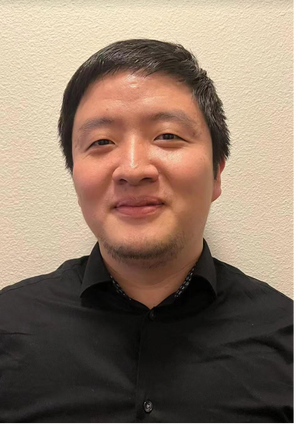 What is your school, program, and year?
UNT Clinical Psychology PhD program, forensic track, 4th year Why psychology and the law? I think expert witness are pretty cool. What is your favorite thing about your current graduate program? The diverse student body both within my program and across campus. If you were not in graduate school what would you do? Statistician or data scientist What advice do you have for those applying to graduate school? The application process is really about fit and NOT who is the best If you could only watch 3 movies or tv shows over and over for the rest of your life, what would they be and why? The Bourne series. Is cereal soup? No. Explain your hot take about cereal. I just doesn’t feel right. Is water wet? Maybe Explain your hot take about water. I don’t know how to answer this question yet. If you could invite five people (dead or alive) to a dinner party, who would it be any why? Freud, Jung, Adler, Beck, Skinner. I just want to watch them arguing with each other. What’s the best Wi-Fi name you’ve seen? Fast internet (my Wi-Fi name, haha) What is your favorite city and why? Shanghai, China. I was born and raised there; the love runs deep. We asked the members of the 2022-2023 Student Committee to answer some questions about themselves to help you get to know who they are and what they do. 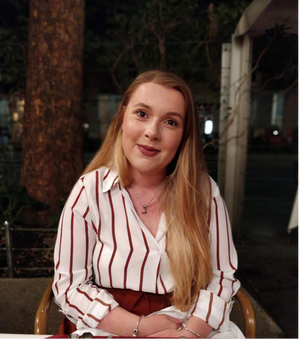 What is your school, program, and year?
University of Birmingham, PhD Psychology, Final Year Why psychology and the law? As a little girl I was always told I should go into law as I loved to debate and stand up for what I believed was right. As I got older, I realised that whilst that sounded interesting, I was more passionate about learning about people and why they behave the way they do. This led me to study Psychology, where I combined my passions of learning about human behaviour and the law and justice by specialising in forensic psychology. Now, I get to use my knowledge and passions to aid vulnerable victims in accessing justice. What is your favorite thing about your current graduate program? My graduate programme allows me to work alongside world renowned academics, passionate forward-thinking practitioners and community actors and other innovative, motivated students from all over the world, including Kenya, Jordan, Lebanon, Rwanda, Palestine, South Korea and Australia. We pride ourselves on our interdisciplinary and international work that allows me to learn from such a broad range of individuals. If you were not in graduate school what would you do? I would work for an NGO or charity that assisted survivors of sexual and gender-based violence. What advice do you have for those applying to graduate school? Make sure you are passionate about the area that you are going into. It can be a difficult time, so it is great to have that passion and interest to fall back on. Ensure that you are a good fit with your mentor/supervisor. This relationship will be integral to your programme. I am fortunate to have an incredibly supportive, understanding supervisor who is top of her field and great at assisting us with gaining opportunities. This goes a long way to my enjoyment with my programme. If you could only watch 3 movies or tv shows over and over for the rest of your life, what would they be and why? Criminal Minds, Gossip Girl and The Greatest Showman, feeds my love of forensic psychology, musical theatre and cliche teen dramas! Is cereal soup? No Explain your hot take about cereal. Traditionally sweet and not savoury. Is water wet? Yes Explain your hot take about water. Water makes other substances wet, therefore by association I would class it as wet. What is a quote you like and who said it? "The past is history, tomorrows a mystery and today is a gift, that is why it is called the present." No idea who originally said it, I learned it from the turtle in Kung Fu Panda! If you could invite five people (dead or alive) to a dinner party, who would it be any why? My mom, brother, husband, grandparents - my comfort people. I know I would have the best time, especially if my nan is cooking. What’s the best Wi-Fi name you’ve seen? router I hardly know her What is your favorite city and why? Rome, Italy. It is where I got engaged. by Cecilia Allan (2020-2022 Communications Officer)
For many of us, the most dreaded part of applying to graduate school is taking the GRE. Here are some tips, tricks, and resources – recommended by other students who successfully completed the GRE and began graduate programs in psychology and law – to help make the process a little less stressful. Tips & Tricks
ETS
Magoosh
|
About the Editor:
The American Psychology-Law Society (Division 41 of the American Psychology Association) Student Committee is composed of elected student leaders representing the interests of our student members. Categories
All
Archives
May 2024
|

 RSS Feed

|
Except where otherwise noted, content on this site is licensed under a Creative Commons Attribution 4.0 International license. Icons by Icons8
|
|